
Is Flossing Really Necessary If You Brush Twice a Day?
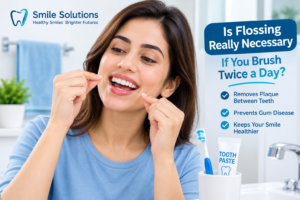
You brush your teeth every morning and night. You use toothpaste, rinse your mouth and try to keep your smile clean. But is that enough?
Is flossing really necessary if you brush twice a day? The short answer is yes. Brushing is essential, but toothbrush bristles cannot effectively clean every tight space between your teeth. Dental floss or another suitable interdental cleaning tool helps remove plaque and food particles from these areas.
According to the American Dental Association (ADA), brushing twice a day and cleaning between your teeth daily are important parts of a healthy oral-care routine.
At Smile Solutions, we believe that understanding simple dental habits can help patients protect their teeth and gums. In this guide, you’ll learn why flossing matters, how to floss correctly, and what to do if traditional dental floss isn’t comfortable for you.
Quick Answer: Is Flossing Really Necessary?
Yes. Flossing is recommended even if you brush your teeth twice a day. A toothbrush cleans many tooth surfaces, but it may not reach plaque between tightly positioned teeth. Cleaning between your teeth once a day with dental floss or another appropriate interdental cleaner helps remove this plaque and supports gum health.
Flossing does not replace brushing. Both are useful parts of a complete oral-hygiene routine.
1. Why Brushing Alone May Not Be Enough
Think about the narrow spaces between your teeth. Your toothbrush can clean the front, back and chewing surfaces, but its bristles may not reach every area between neighboring teeth.
These spaces can collect:
- Food particles left after meals
- Plaque, a sticky film containing bacteria
- Bacteria that contribute to tooth decay
- Plaque along the gumline that can irritate your gums
When plaque remains on teeth, it can contribute to tooth decay and gum disease. If it hardens into tartar, you cannot remove it simply by brushing or flossing; professional dental cleaning may be needed.
That is why is flossing really necessary if you brush twice a day? is an important question. Brushing and interdental cleaning work together rather than replacing one another.
2. Can Flossing Help Prevent Gum Disease?
Yes, regular cleaning between the teeth can help reduce plaque and support healthier gums.
Plaque buildup around the gumline can irritate gum tissue. Early gum inflammation, known as gingivitis, may cause redness, swelling or bleeding when you brush or clean between your teeth.
Adding interdental cleaning to brushing may help reduce plaque and gingivitis, although the benefits depend on the technique, the cleaning tool and individual oral-health needs.
If your gums bleed repeatedly, don’t assume that flossing is the only cause. Persistent bleeding may be a sign of gum inflammation or another dental problem that needs assessment.
Read our related guide: [Why Are My Gums Bleeding When I Brush?]
3. Can Flossing Help Prevent Cavities Between Teeth?
Yes, flossing can help remove plaque and food debris from between your teeth, where cavities may develop.
A toothbrush alone may not adequately clean these narrow spaces. By cleaning between your teeth daily, you help remove plaque from areas that brushing can miss.
However, flossing is not a guarantee against cavities. Your risk also depends on factors such as sugar intake, fluoride exposure, saliva, brushing habits and existing dental conditions.
For better protection:
- Brush twice a day with fluoride toothpaste.
- Clean between your teeth daily.
- Limit frequent sugary snacks and drinks.
- Attend dental checkups as recommended.
If you have tooth pain or suspect a cavity, don’t rely on flossing alone to solve the problem. A dentist can check whether treatment is necessary.
4. Does Flossing Help With Bad Breath?
It can.
Food particles and plaque trapped between your teeth may contribute to unpleasant breath. Cleaning these areas can help remove some of the material that contributes to bad breath.
However, bad breath can also be associated with tongue coating, gum disease, dry mouth, certain foods and other conditions.
If you brush and floss regularly but still experience persistent bad breath, a dental examination can help identify the cause.
Read our guide: [Why Do I Have Bad Breath Even After Brushing?]
5. How Often Should You Floss?
For most people, the recommendation is to clean between their teeth once a day using dental floss or another suitable interdental cleaning tool. Continue brushing with fluoride toothpaste twice daily for about two minutes.
You can floss in the morning, after lunch or before bedtime. The best time is the time you can maintain consistently.
If you prefer to floss at night, make it part of your bedtime routine. If you’re too tired at night, choose another time rather than skipping interdental cleaning altogether.
6. How to Floss Your Teeth Correctly
If you’re new to flossing, the technique may feel awkward at first. With practice, it usually becomes easier.
Follow these steps:
- Take enough floss. Hold a manageable length between your fingers, leaving a short section to work with.
- Guide it gently between two teeth. Avoid snapping the floss into your gums.
- Curve it around one tooth. Form a C-shape against the tooth surface.
- Move it gently up and down. Clean the side of the tooth and carefully reach just beneath the gumline.
- Clean the neighboring tooth. Repeat against the other tooth surface in the same gap.
- Use a clean section of floss. Move to the next space and repeat.
The aim is to clean the sides of the teeth gently, not to force floss into the gums. The NHS also recommends using a C-shaped motion to clean each tooth surface.
7. Should You Floss Before or After Brushing?
Either order is acceptable as long as you clean thoroughly.
Some people prefer to floss before brushing so that loosened plaque and food debris can be cleared away during brushing. Others find it easier to floss afterward.
The ADA says that the most important thing is to clean between your teeth effectively and make it a daily habit.
Choose a routine that you can follow consistently.
8. What If Your Gums Bleed When You Floss?
A little bleeding may occur when you begin cleaning between your teeth, particularly if your gums are already inflamed. However, you should not ignore bleeding that continues or becomes frequent.
Use gentle technique and avoid forcing floss against your gums. If bleeding persists, or you have swollen, tender gums, arrange a dental checkup. Gum disease is one possible cause of persistent bleeding.
If you experience significant pain, swelling or other concerning symptoms, seek dental advice rather than continuing to irritate the area.
9. What If You Don’t Like Traditional Dental Floss?
Good news: traditional floss isn’t your only option.
Depending on your teeth and dental needs, you may be able to use:
- Floss picks: Small handles that hold a short piece of floss and can be easier to manage.
- Interdental brushes: Small brushes designed to clean between teeth, especially where the spaces are wide enough.
- Water flossers: Devices that use a stream of water to help clean between teeth and around certain dental appliances.
- Special floss threaders: Useful for reaching around some bridges, braces and other dental work.
The most suitable tool depends on the size of your interdental spaces, your dexterity and your dental condition. Your dentist can help you choose the right option.
If traditional floss doesn’t work for you, don’t abandon cleaning between your teeth altogether. Ask about an alternative you can use properly and regularly.
10. What Happens If You Never Floss?
If you never clean between your teeth, plaque and debris may remain in areas your toothbrush cannot reach effectively.
Over time, this can contribute to:
- Increased plaque between teeth
- Gum inflammation
- A greater risk of decay in hard-to-clean areas
- Tartar buildup
- Problems associated with poor gum health
The outcome varies from person to person. Some people may not notice an immediate problem, but the absence of symptoms doesn’t mean every area is clean. Brushing and daily interdental cleaning help address different parts of your mouth.
So, is flossing really necessary if you brush twice a day? For most people, adding daily interdental cleaning is a sensible step toward better oral hygiene.
11. Build a Simple Daily Oral-Care Routine
You don’t need a complicated routine to look after your teeth. Start with these basic habits:
Morning
- Brush for about two minutes with fluoride toothpaste.
- Clean your tongue gently if appropriate for you.
During the day
- Drink water regularly.
- Limit frequent sugary snacks and drinks.
- Avoid using sharp objects to remove food stuck between your teeth.
Evening
- Clean between your teeth using floss or a suitable alternative.
- Brush for about two minutes with fluoride toothpaste, including before bed.
- Spit out the toothpaste rather than rinsing immediately with water, so you don’t wash away much of the fluoride left on your teeth.
If you have braces, bridges, dental implants or a history of gum disease, ask your dentist whether your routine needs to be adjusted.
Frequently Asked Questions
Is flossing really necessary if you brush twice a day?
Yes. Brushing cleans many tooth surfaces, while flossing or another interdental cleaner helps reach the spaces between teeth. Daily interdental cleaning is recommended alongside brushing twice a day.
Can I have healthy teeth without flossing?
Some people may have fewer problems than others, but brushing alone may leave plaque between teeth. Cleaning these areas daily helps support gum health and reduce the risk of dental problems.
Is flossing better than brushing?
Neither replaces the other. Brushing cleans the accessible surfaces of teeth, while flossing focuses on spaces between them. Both have a role in daily oral care.
Should I floss every day?
For most people, yes. Aim to clean between your teeth once a day with floss or another suitable interdental cleaning tool.
Is it normal for gums to bleed when flossing?
Bleeding can occur when gums are inflamed or when flossing technique is too forceful. Persistent bleeding should be assessed by a dentist rather than ignored.
Can I use a water flosser instead of regular floss?
A water flosser may be a useful alternative for some people, including certain patients with braces or dental work. The best choice depends on your oral-health needs and how effectively you can use the device. Ask your dentist for personalized advice.
Should I floss before or after brushing?
Either is acceptable if you clean thoroughly. Choose the order that helps you maintain the habit every day.
Can flossing remove tartar?
No. Floss can remove plaque and debris, but hardened tartar generally requires professional removal by a dental professional.
Can flossing stop bad breath?
It can help if trapped food and plaque between teeth contribute to the problem. Persistent bad breath may have other causes and may require a dental examination.
Is flossing necessary for children?
Cleaning between children’s teeth is important when their teeth touch and a toothbrush cannot clean the contact areas effectively. Parents should ask a dental professional for age-appropriate guidance and help children develop safe cleaning habits.
Final Verdict: Should You Floss If You Brush Twice a Day?
Yes — brushing twice a day is an excellent start, but it shouldn’t be your only cleaning habit. Cleaning between your teeth once a day helps remove plaque and food debris from areas your toothbrush may miss.
You can use traditional floss, floss picks, interdental brushes or another suitable tool depending on your needs.
The most important thing is to choose a method you can use correctly and consistently, and to seek professional advice if your gums bleed persistently or you have ongoing dental problems.
Looking for Dental Advice in Lahore?
At Smile Solutions Dental Clinic in Lahore, you can discuss your oral-hygiene concerns and learn how to care for your teeth and gums according to your individual needs.
If you have bleeding gums, persistent bad breath, tooth sensitivity or concerns about plaque buildup, a dental checkup can help you understand what’s happening and what steps may help.
Visit [Who We Are] to learn about Smile Solutions, or [Contact Us] to arrange an appointment.